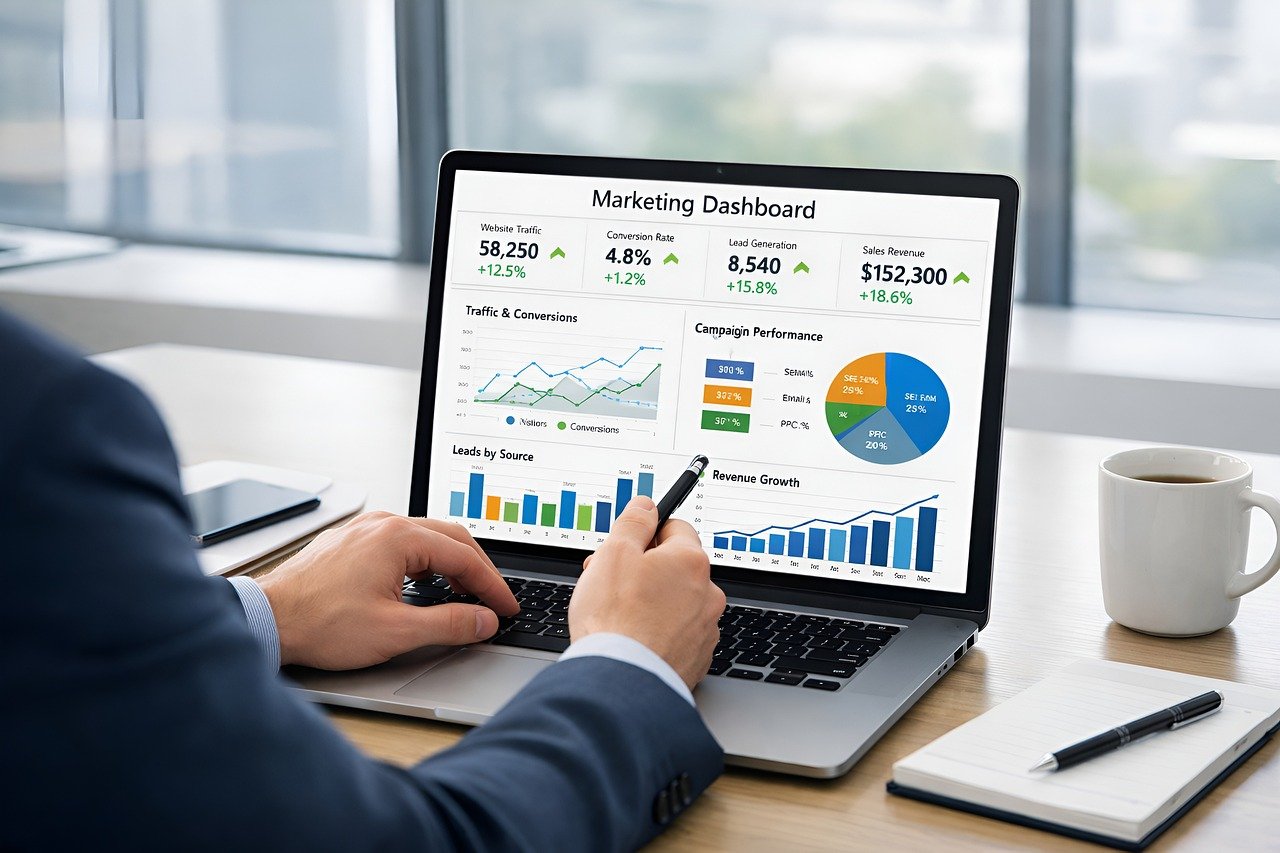

Real-Time Data Tracking for Agile Marketing Decisions
In today’s fast-paced business landscape, real-time data tracking has become an indispensable tool for marketers aiming to make agile decisions. By leveraging advanced analytics tools, professionals can monitor key performance indicators (KPIs) and marketing metrics with unprecedented immediacy. This empowers organizations to pivot their strategies efficiently, ensuring that they remain aligned with current market trends and consumer behaviors. Implementing these systems allows companies to capture unique insights and identify patterns in customer interactions. For example, tracking real-time click-through rates enables marketers to understand which campaigns resonate with their audience. This immediate feedback is crucial when allocating budgets effectively, optimizing ad spend for maximum ROI. Additionally, real-time data enables marketers to assess the performance of various channels, be it social media, email campaigns, or traditional advertising. Increased visibility into these metrics allows businesses to adjust their approaches swiftly, ensuring they remain competitive in a crowded market. Ultimately, embracing real-time data tracking facilitates proactive decision-making, allowing marketing teams to capitalize on emerging opportunities or swiftly address challenges as they arise.
The Importance of KPIs in Marketing
Key performance indicators (KPIs) play a critical role in evaluating the performance of marketing efforts. By closely monitoring these metrics, organizations gain a clear understanding of their campaign effectiveness. For instance, measuring customer acquisition cost (CAC) and customer lifetime value (CLV) are pivotal in assessing profitability. Additionally, understanding conversion rates can help marketers refine their strategies further. KPIs allow teams to set measurable goals, continually assess progress, and adjust tactics as necessary. Just as importantly, KPIs foster accountability among team members, ensuring that everyone aligns with the business’s overarching goals. Through collaborative efforts, teams can analyze performance metrics to derive insights that drive improvements in campaign execution. Regularly reviewing KPIs also offers opportunities to celebrate successes while identifying areas for growth. Engaging stakeholders in these discussions encourages a data-centric culture within marketing organizations. Moreover, aligning KPIs with business objectives ensures that marketing efforts contribute to overall company success. In conclusion, recognizing the importance of KPIs lays the foundation for strategic decision-making, particularly when combined with real-time data tracking to achieve agile responses.
Real-time data tracking significantly enhances the process of collecting marketing metrics. Traditional methods often yield delayed insights, making it challenging for teams to react to changing market conditions. However, by investing in automated analytics tools, marketers can access up-to-date information at their fingertips. From web traffic analysis to social media engagement, these tools provide comprehensive views of marketing performance. This immediate access allows teams to optimize their campaigns instantaneously. For example, if a particular ad campaign is underperforming, marketers can quickly reallocate resources or adjust messaging to improve effectiveness. Furthermore, integrating real-time data tracking with existing marketing platforms streamlines reporting processes. It eliminates the need for manual data entry, reducing errors and freeing up valuable time for strategy development. Such efficiencies empower marketing teams to focus on creative solutions rather than administrative tasks. Moreover, with visualization dashboards, stakeholders can quickly comprehend complex data sets. This accessibility encourages informed conversations about campaign performance. Ultimately, real-time data transforms the way marketers approach campaigns, enabling them to act decisively and strategically in a dynamic environment.
Moreover, employing real-time data tracking fosters a culture of agility within organizations. When marketing teams operate with current insights, they can swiftly adapt their strategies to align with evolving consumer preferences. Agile marketing prioritizes experimentation; real-time data provides the empirical evidence necessary for these initiatives. For instance, A/B testing campaigns can yield immediate results, allowing teams to discern which variances yield superior engagement. This iterative process encourages rapid learning and continuous improvement, essential for keeping pace in competitive markets. Additionally, real-time data informs better customer segmentation strategies. By analyzing behavioral data, marketers can tailor offerings to specific demographics. This bespoke approach enhances customer satisfaction, leading to improved retention rates. Quick adjustments based on real-time feedback also allow organizations to clear any potential misalignments between their messaging and audience expectations. Furthermore, being responsive to consumer needs enhances brand loyalty, as customers feel valued when their preferences are acknowledged and acted upon. As organizations embrace real-time data tracking in their marketing efforts, they cultivate an agile culture that drives success and fosters meaningful connections.
Challenges of Real-Time Data Tracking
Real-time data tracking, while powerful, is not without its challenges. Implementing such systems requires substantial investments in technology and infrastructure, often posing significant hurdles for smaller organizations. Data accuracy is another critical concern; discrepancies in collected data can lead to misguided strategies. Therefore, ensuring the reliability of tracking systems is essential before relying upon them for decision-making. Furthermore, education and training for team members play a crucial role in maximizing the value of real-time data. Without adequate knowledge of data analysis and interpretation, teams may overlook actionable insights. Additionally, an information overload is a common issue; marketers can become inundated with data and lose sight of key performance aspects. Thus, establishing clear criteria for what metrics matter the most is essential to streamline data insights. Regularly scheduled reviews should be undertaken to assess the relevance of specific KPIs and metrics. Recognizing the importance of real-time data amid these challenges creates opportunities for businesses to strategically evaluate their approach. In summary, navigating these obstacles with care positions organizations to benefit immeasurably from real-time data tracking.
To successfully implement real-time data tracking, organizations must focus on integrating technology seamlessly within their existing frameworks. By leveraging platforms that facilitate the collection and analysis of relevant data, marketers can attain a holistic view of their performance. Cloud-based solutions have gained popularity for their capacity to update data in real-time, allowing for instantaneous collaboration among teams. Additionally, utilizing machine learning and AI algorithms helps in processing vast quantities of data efficiently, uncovering trends that manual methods might miss. Further, ensuring that data governance policies are in place safeguards data integrity and compliance. Establishing clear protocols for data collection and usage will enable marketers to make informed decisions with confidence. Investing in robust data visualization tools also enhances understanding among stakeholders, transforming complex datasets into digestible insights. These platforms allow teams to track performance in real-time, promoting data-driven discussions and faster decision-making processes. Furthermore, as organizations become more attuned to leveraging data, they will cultivate a competitive edge. Ultimately, through strategic implementation, businesses can harness the full potential of real-time data tracking for agile marketing initiatives.
In conclusion, the integration of real-time data tracking into marketing strategies is crucial for agile decision-making in the current marketplace. As organizations adapt to rapid change, the ability to glean actionable insights from live data fosters improved campaign performance. By emphasizing the importance of KPIs and metrics while overcoming inherent challenges, businesses can empower their marketing teams to operate effectively. The emphasis on collaboration and shared learning enhances organizational agility, resulting in a more responsive approach to consumer needs. Ultimately, real-time data tracking enriches the decision-making process, allowing organizations to tailor their efforts to align with market dynamics. Furthermore, as marketers continuously refine their skills in data interpretation, their capability to innovate and adapt will significantly improve. This culture of agility not only drives short-term success but also lays the foundation for long-term sustainability in a competitive landscape. As companies navigate future challenges, the ability to make informed decisions at the speed of the market will be their greatest asset. The journey toward embracing data-driven strategies will surely define the next generation of marketing excellence.